
ICVA’s 2026 NAVLE® Practice Analysis
The NAVLE® Practice Analysis History & Timeline
In mid-2025, the ICVA began preparing for the NAVLE practice analysis, a crucial process in keeping the exam current, relevant, and aligned with the realities of veterinary practice.
Practice analyses are conducted periodically—previous ones completed in 2003, 2010, and 2017—to identify the knowledge and skills critical for safe and effective veterinary practice. The findings are then used to update the NAVLE blueprint, keeping the assessment aligned with the skills and competencies expected of newly licensed veterinarians.
After reviewing proposals from twelve vendors, the ICVA Board’s review committee selected Data Recognition Corporation (DRC) to lead the practice analysis. ICVA staff—including Chief Executive Officer Hather Case, Chief Operating Officer Janine Hawley, Chief Assessment Officer Dr. Kent Hecker, and others—have been working closely with a team of five DRC staff members throughout the process. DRC is a recognized leader in high-stakes assessment development, providing practice analyses, exam creation, and psychometric services to more than 50 clients across licensure, certification, education, and government sectors.
The practice analysis will invite veterinarians from across the United States and Canada to participate in surveys designed to capture a wide range of perspectives.
“The importance of reaching a large and diverse group of practitioners is to help guide the practice analysis process and ultimately any updates or changes required for the NAVLE blueprint. This includes collecting current information regarding best practices in veterinary care across species, changes in practice type, and updates on important veterinary competencies for entry-level practitioners.” – Dr. Kent Hecker, ICVA Chief Assessment Officer
Input will be sought from seasoned practitioners as well as those early in their careers, allowing the exam blueprint to reflect both long-standing professional experience and the evolving realities of new graduates entering the workforce.
The Three-Phase Practice Analysis Process
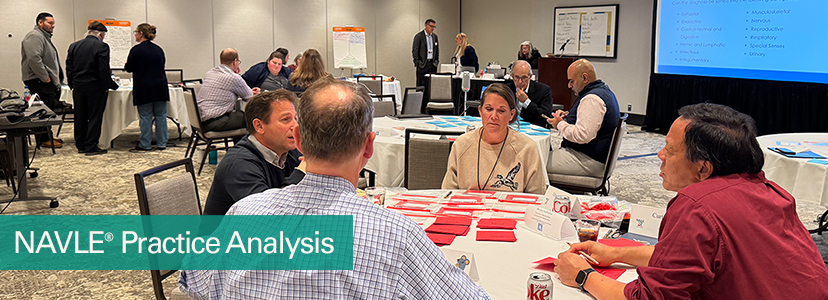
Phase I of the NAVLE Practice Analysis took place in fall 2025, and focused on research and assembling committees, including an Advisory Committee and Focused Competency Area Committee. These groups met in separate workshops, facilitated by the Data Recognition Corporation (DRC), to kick off the process.
October Advisory Committee Workshop:
The NAVLE practice analysis began with a two-day meeting in Chicago, where 17 advisory committee members (16 in person, one remote) gathered to determine which diagnoses and competencies should be evaluated in the upcoming survey of practicing veterinarians. All volunteers were selected with deliberate attention to representation across species expertise, geography, years in practice, and employment sector. The presence of recent graduates and veterinarians in active clinical practice was also a top priority.
“As a new volunteer with the ICVA, participating in the NAVLE Practice Analysis has been an energizing and highly rewarding experience. What made this experience particularly meaningful was the dedication and diversity of the colleagues involved, veterinarians from different sectors and regions who brought thoughtful perspectives and a shared commitment.” – Dr. Hélène Lardé, first year volunteer, Advisory Committee Workshop member, and NAVLE item writer
November Focused Competency Workshop:
Building on the advisory committee's foundational work, ICVA volunteers and DRC convened in Philadelphia for a second two-day workshop. This session brought together a larger group—28 volunteers in total, including 23 onsite and five participating virtually. Five advisory committee members returned for this event. Additionally, Subject Matter Experts (SMEs) from bovine, porcine, small mammals, birds, and reptiles were in attendance.
“I think the work we did was super important, exotic animal medicine has changed and is changing rapidly. It was fantastic to get a chance to have the NAVLE’s exotic animal sections reflect these updates.” – Daren Mandrusiak Morris, first year volunteer, Focused Competency Workshop member, and NAVLE item writer
This workshop further refined decisions regarding which species, diagnoses, and clinical presentations should appear in the practice analysis survey.
Phase II moves into survey development and outreach, with the survey distribution planned for April 2026.
Survey Development:
DRC has already begun drafting the practice analysis survey using the outcomes from the October and November workshops. The survey development period will translate months of volunteer discussion into a comprehensive asset ready for distribution to veterinarians.
Every response matters—veterinarians from all backgrounds help shape the NAVLE, keeping it a fair, relevant, and practical reflection of veterinary practice across North America.
Veterinarians from across the United States and Canada will be invited to participate in surveys designed to capture a wide range of perspectives. As noted previously, input will be sought from seasoned practitioners and those early in their careers, allowing the exam blueprint to reflect both long-standing professional experience and the evolving realities of new graduates entering the workforce.
Phase III will focus on analyzing the survey results and applying them to an update of the NAVLE blueprint—the framework that guides the assessment’s content and structure. This phase will translate the practice-based insights collected from veterinarians into actionable revisions, keeping the NAVLE aligned with the latest knowledge and skills required for safe and effective veterinary practice. Phase III is expected to conclude by October 2026, with the updated blueprint slated to take effect beginning with the 2027–2028 NAVLE testing cycle.