NAVLE Practice Analysis


A close-up of a logo

AI-generated content may be incorrect.

The North American Veterinary Licensing Examination® (NAVLE®) is developed based on a practice analysis that outlines the tasks veterinarians perform and the knowledge necessary for competent practice. The International Council for Veterinary Assessment® (ICVA®) regularly reviews the NAVLE through a practice analysis to confirm it accurately assesses the knowledge required for entry-level veterinarians. The findings from these reviews are used to update the examination blueprint for the NAVLE.


OUR PRACTICE ANALYSIS PARTNERS

The ICVA is collaborating with the Data Recognition Corporation (DRC) on the practice analysis for the NAVLE. The work done through this partnership builds on the previous work done in coordination with the National Board of Medical Examiners (NBME), which is responsible for developing, administering, and scoring the exam.

DRC is a distinguished leader in the United States, specializing in the development and administration of high-stakes, psychometrically sound assessments. The organization offers practice analyses, examination development, and psychometric services, providing a dedicated team with a collective experience of over one hundred years to partner with the ICVA.

This partnership advances the ICVA’s longstanding mission to provide world-class examinations and other assessment tools to protect public and animal health and welfare.

A blue circle with white text

AI-generated content may be incorrect.


PRACTICE ANALYSIS OVERVIEW


The NAVLE Practice Analysis is periodically conducted by the ICVA to thoroughly evaluate the knowledge required of entry-level veterinarians. The recruitment process for the Practice Analysis is intentionally designed to ensure fair representation across criteria that reflect the demographics of the veterinary profession.

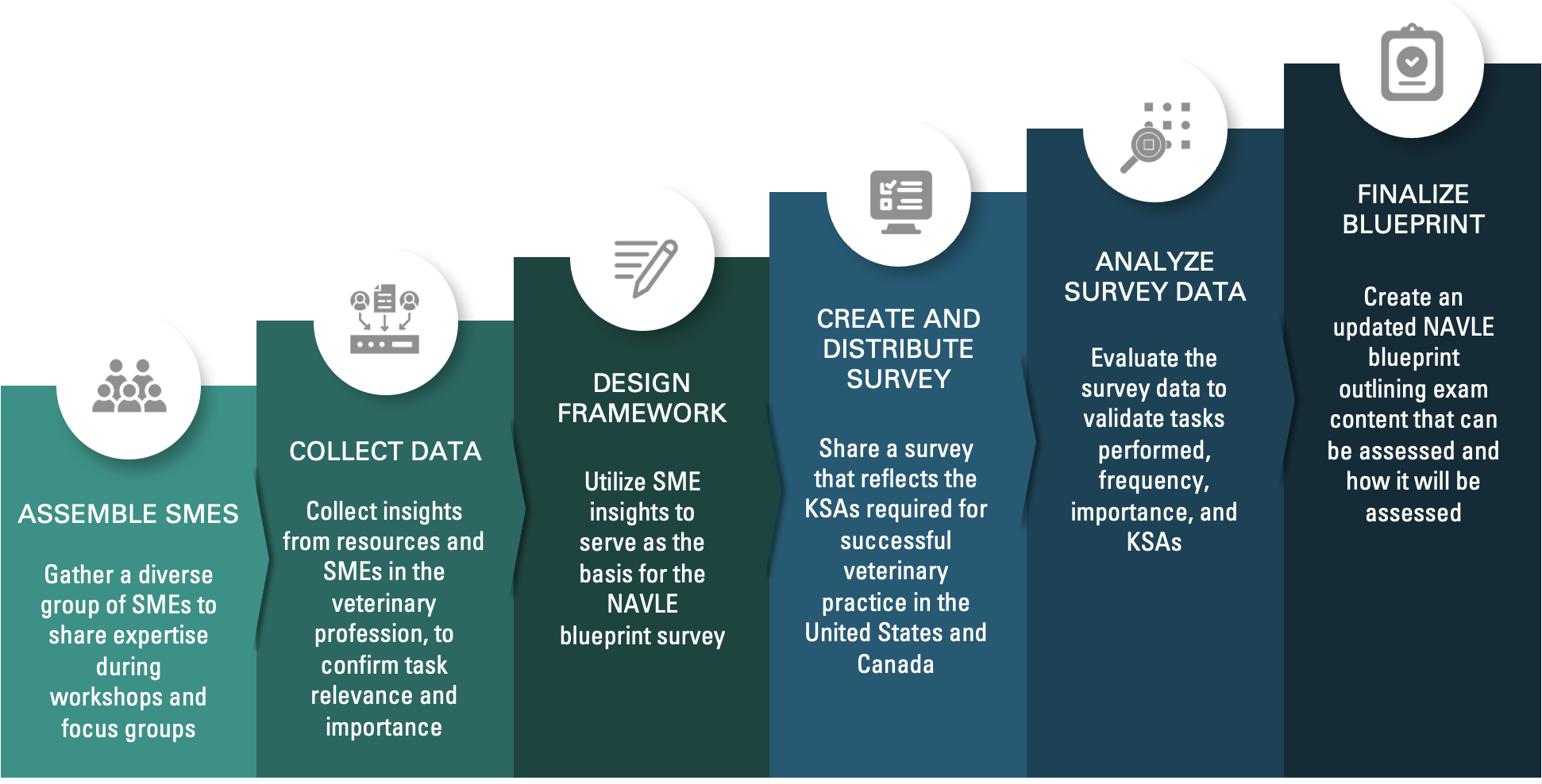
To support this effort, the ICVA has assembled a diverse group of experienced Subject Matter Experts (SMEs) to participate on the Advisory Committee and in focus groups, who:

  • practice in the United States or Canada,
  • have expertise in one or more of the major species on the NAVLE, and
  • are actively engaged in clinical practice.

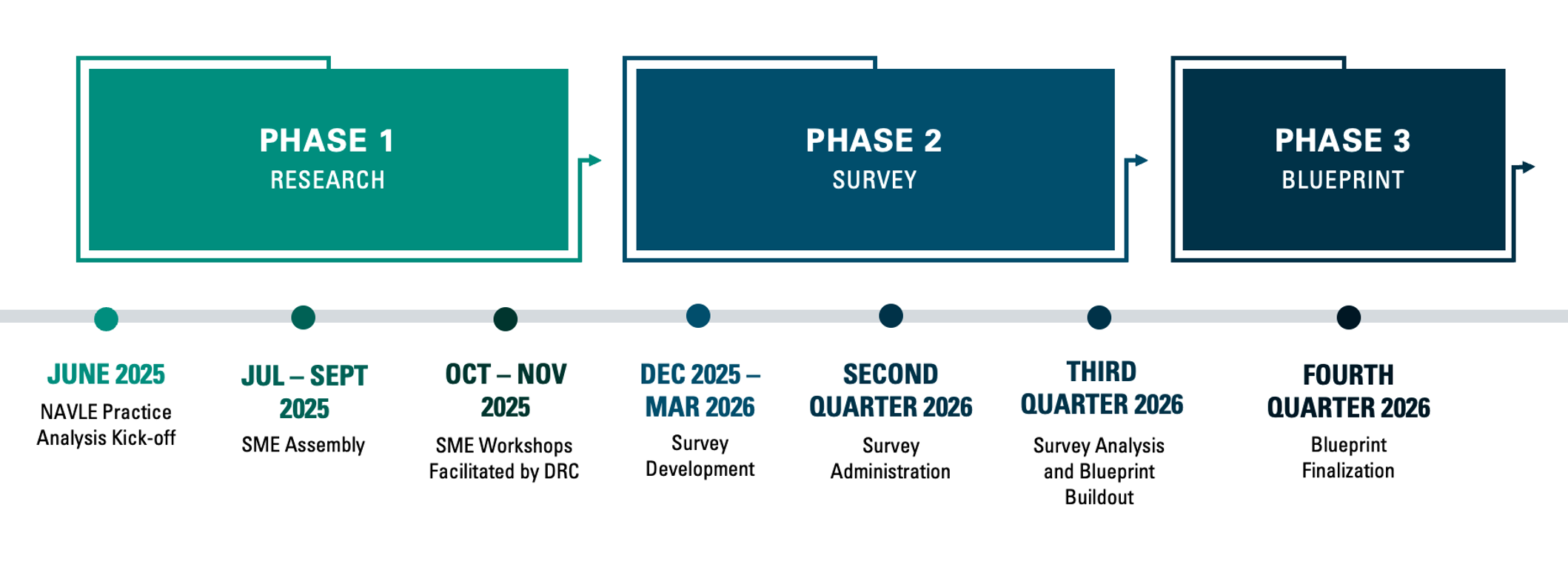
Data will be methodically collected from the Advisory Committee and the focus groups as an essential component of the NAVLE process to construct a survey that reflects the Knowledge, Skills, and Abilities (KSAs) required for the successful practice of veterinary medicine in the United States and Canada.

The survey will be used to validate the tasks performed, their frequency, their importance, and the KSAs required. This feedback will serve as the basis for the development of the new NAVLE blueprint. These steps will help to ensure that the NAVLE maintains its validity, relevance, and defensibility.

The ICVA is committed to promoting collaboration within the veterinary profession and will actively involve various partners to encourage their participation. ICVA will also work with partners in the United States and Canada to identify a representative sample for the upcoming Practice Analysis Survey, just as we did during the previous practice analysis.


PROGRESS AND A LOOK FORWARD

2017 NAVLE PRACTICE ANALYSIS

To uphold the relevance of licensure examinations required for the practice of veterinary medicine, the ICVA conducts periodic practice analyses. Previous analyses were completed in2017, 2010, and 2003. The links below were disseminated to ICVA constituent organizations, accredited veterinary schools, and other interested parties on October 11, 2017, and were made publicly available on the ICVA website. The 2017 blueprint, which was developed for the ICVA by the National Board of Medical Examiners, received formal approval from the ICVA Board of Directors in June 2017.


The 2017analysis obtained information regarding several essential characteristics of veterinary practice: (a) work context, (b) animal species and diagnoses managed, (c) clinical and professional competencies required for success, and (d) foundational and basic veterinary sciences knowledge necessary to effectively perform the responsibilities of the practice.


Each of these characteristics provides important considerations when designing and developing an examination's blueprint and overall context.For additional details, visit the NAVLE Practice Analysis (2017) or Executive Summary.  


SETTING A HIGHER STANDARD TOGETHER®